On another evening, my colleague and I went to the Grand Bazaar in Istanbul. This is one of the oldest markets in the world, originally intended for people from Asia to bring goods that would eventually end up in Europe and vice versa. Today it is a tourist attraction with many, many 'rooms' that contain lots of booths that sell touristy stuff. Mixed in here and there are boutiques with a little more unique content.
Mirrored and glass goods, enameled goods, carpets, cotton and linen towels, scarves, hats, jewelry, copper goods, wall hangings, spices, etc. are all available here. And let us not forget the ubiquitous Turkish delight sweetmeat!
We spent a couple of hours wandering around looking at items, buying stuff, taking pictures and generally getting a feel for the place before heading out to dinner. It does get a bit overwhelming at times. There are areas that traditionally housed the carpets, the copper goods, the fabrics, etc. and these still tend to stay true to form.
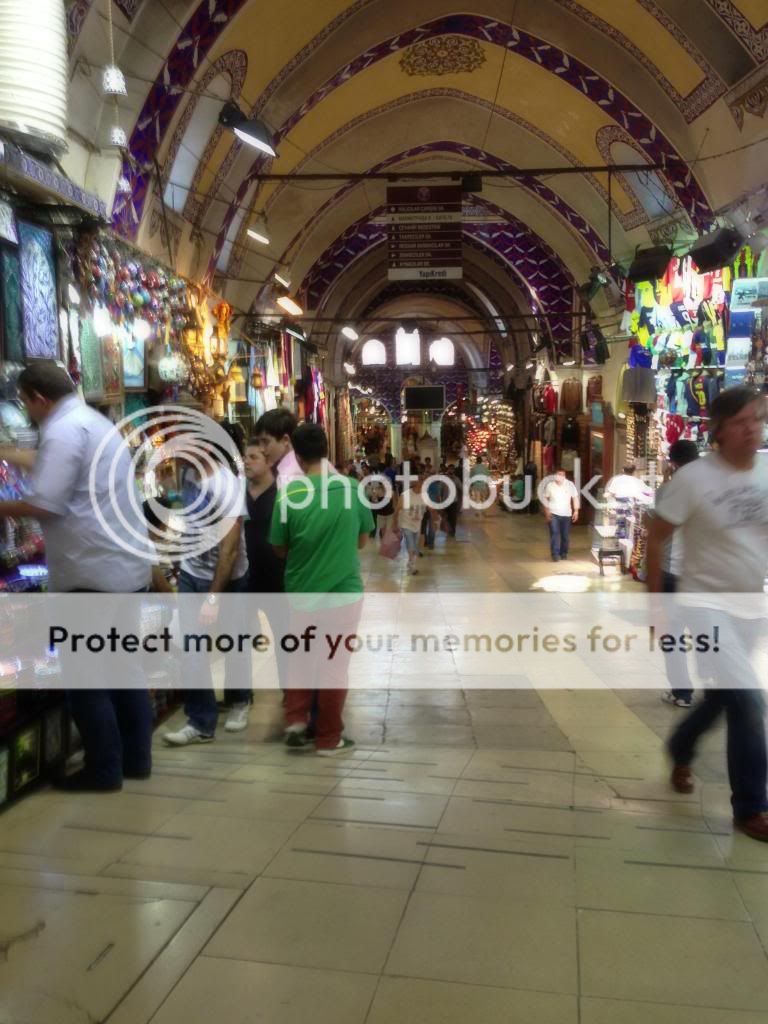
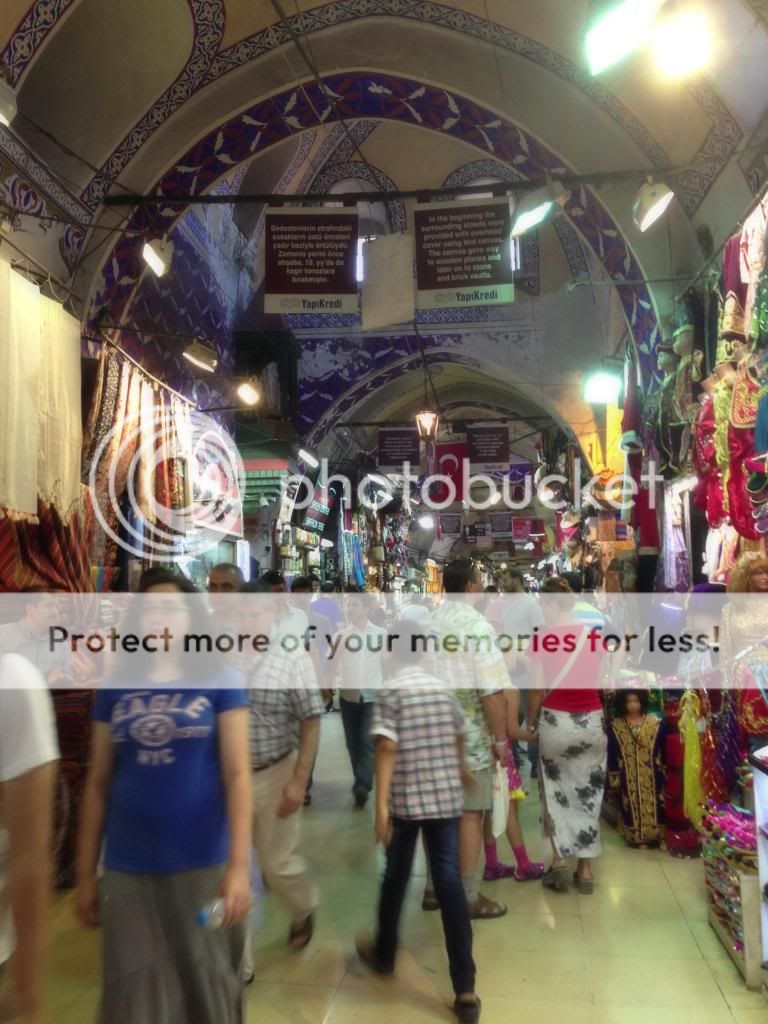
Looking down one of the 'streets' in the Grand Bazaar:

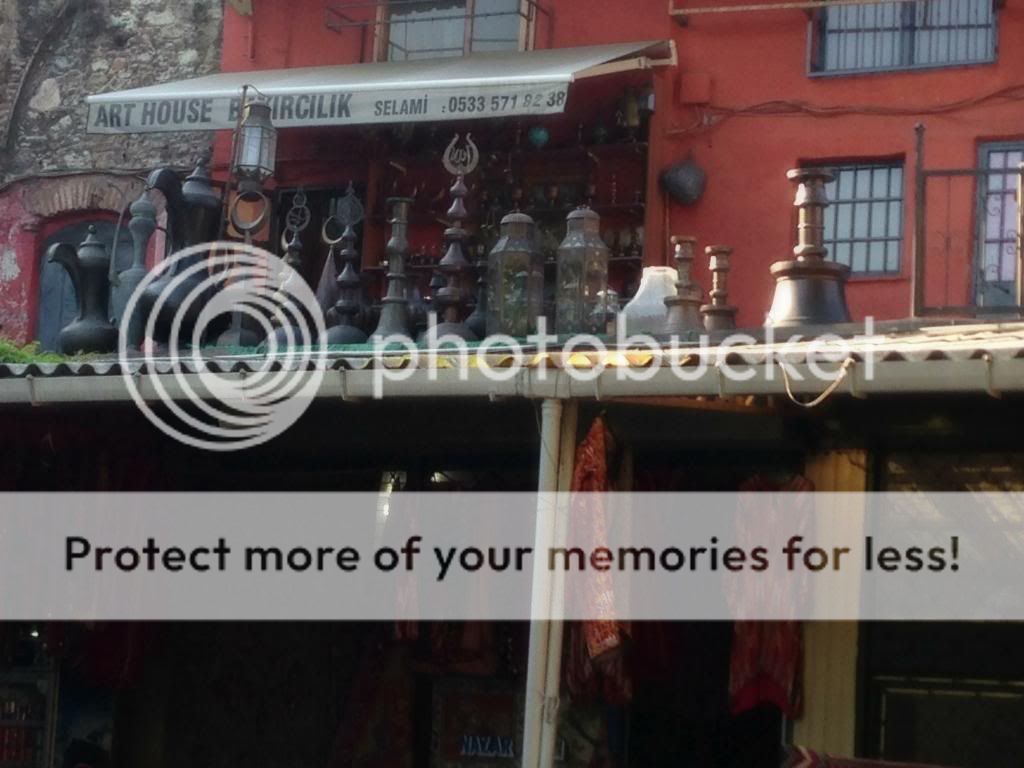
 I really wanted to bring home one of these copper vessels but they were too big. Some day...
 There are cafes in the Grand Bazaar. In fact, we met up at one of them. But there also used to be a mosque. This is what you can see of it today:
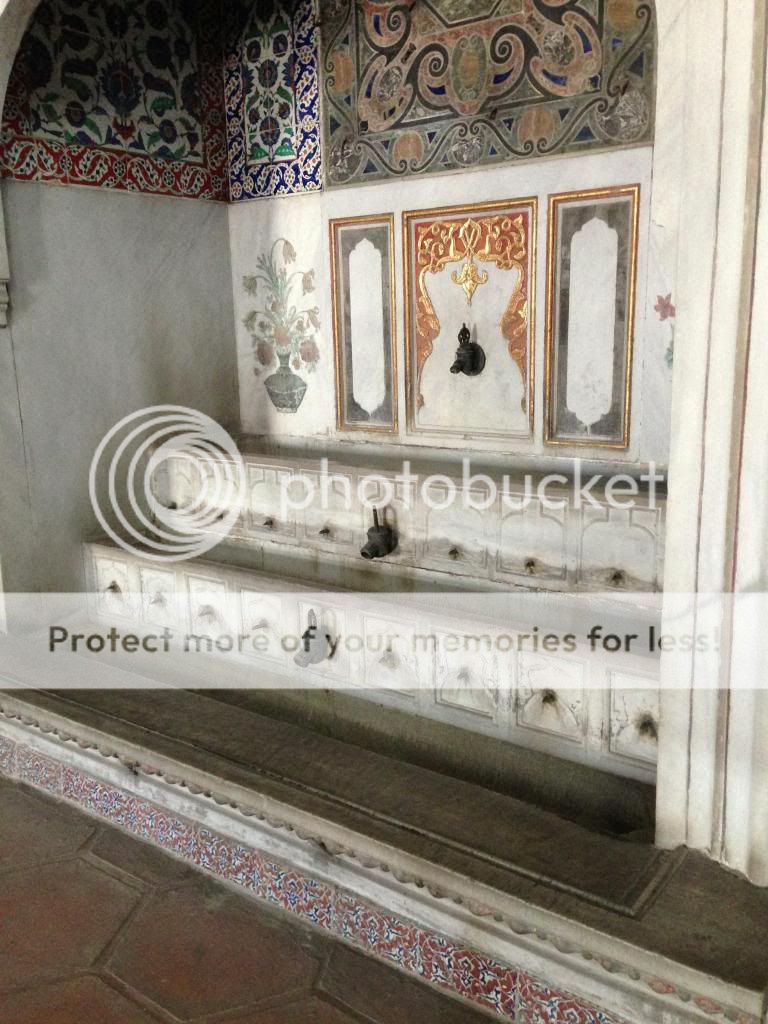
 The Grand Bazaar now is all about commerce, not religion. But there is a water fountain where one can drink, or maybe wash one's feet before worship? I don't know. I just thought it was beautiful.
 The area around the Grand Bazaar is also chock-a-block with shops. This maze of streets and shops extends for quite a distance around the Grand Bazaar in the old part of town. The old part is where all these places are located. One can easily walk from the Topkapi palace to the Hagia Sofia to the Grand Bazaar if one is willing to walk up and down hills on narrow streets. What little I did of it was fun! There are also some upscale shops around the Grand Bazaar. We went into a carpet shop because we loved the carpets in the window. Beautiful but not very affordable and definitely not for stepping on.
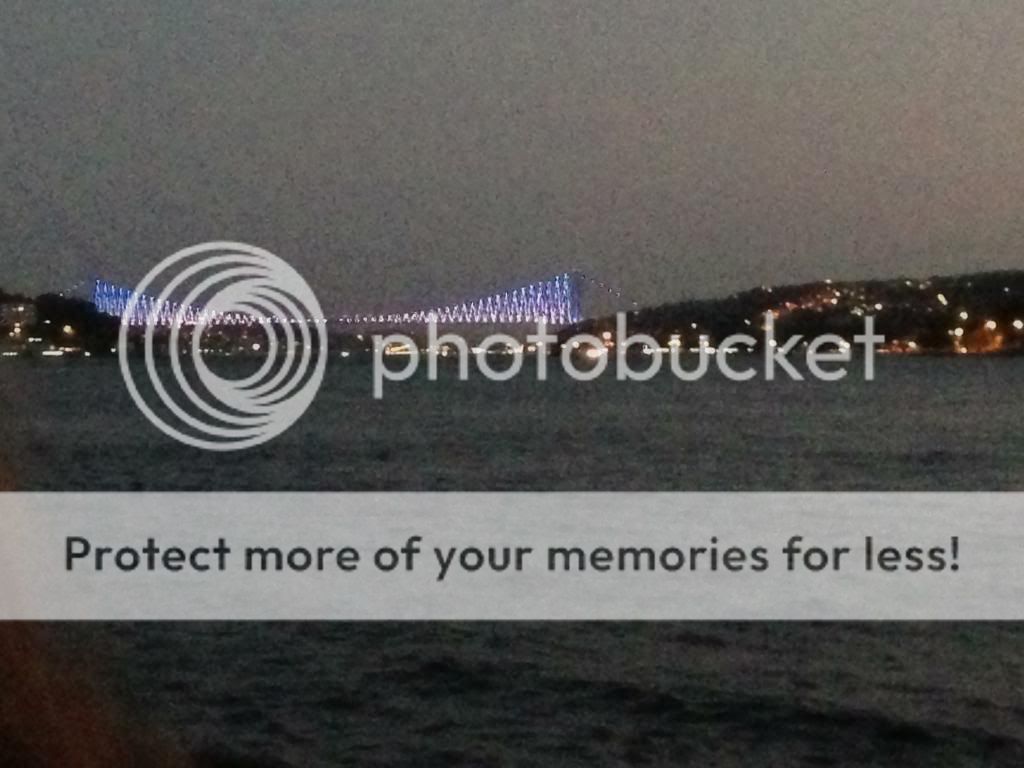
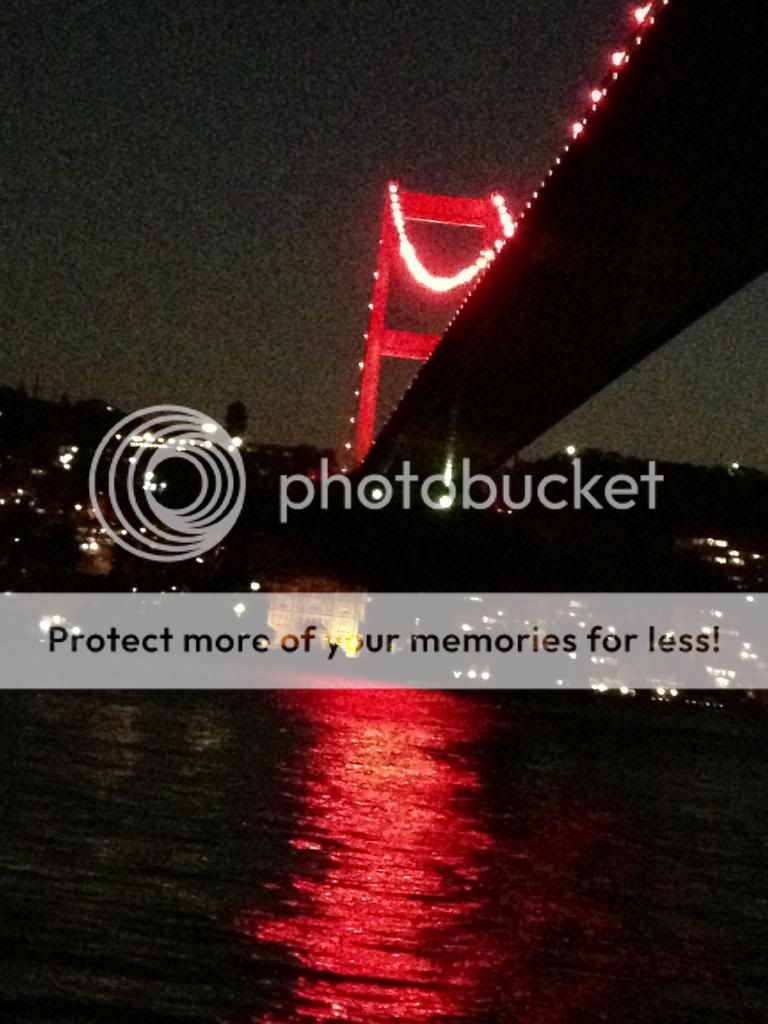
 One last shot of a bridge lit up with colored lights and the reflections on the water...

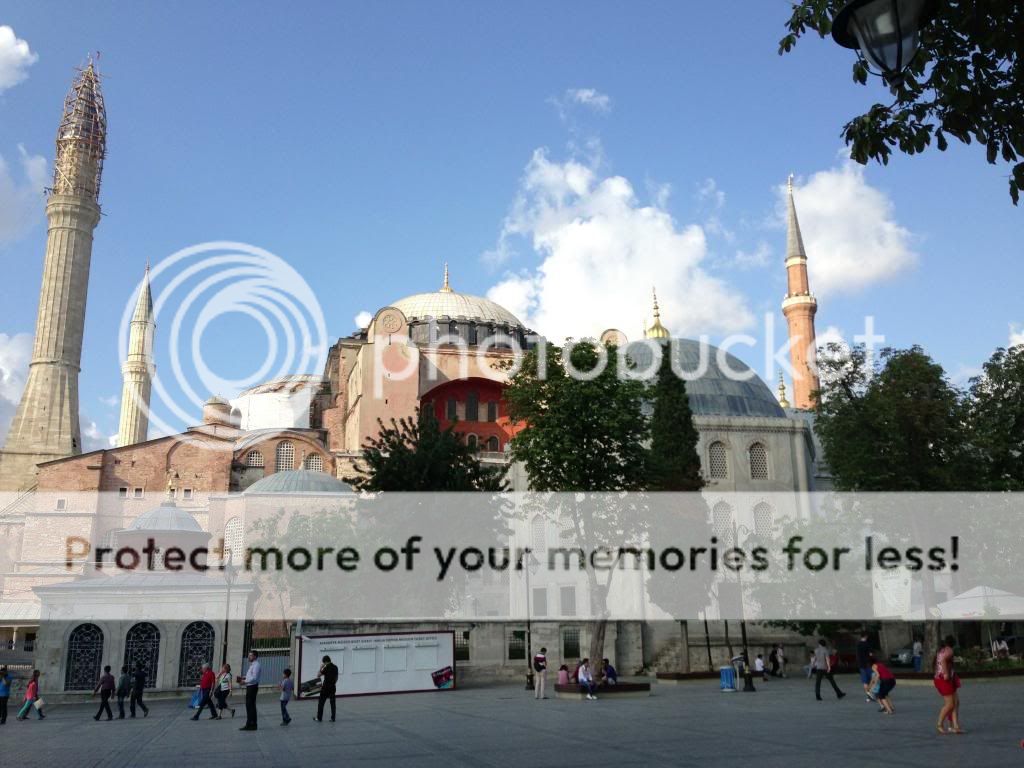
The next day was spent at the Hagia Sofia and the Blue mosque. The Hagia Sofia was a church when Istanbul was still Constantinople. When the Muslims invaded and took over, it was converted into a mosque. Then, when Kemal Ataturk established the secular state of Turkey, it became a museum. All I can say is that it is beautiful and I could spend lots more time in there just feasting my eyes on the various details.
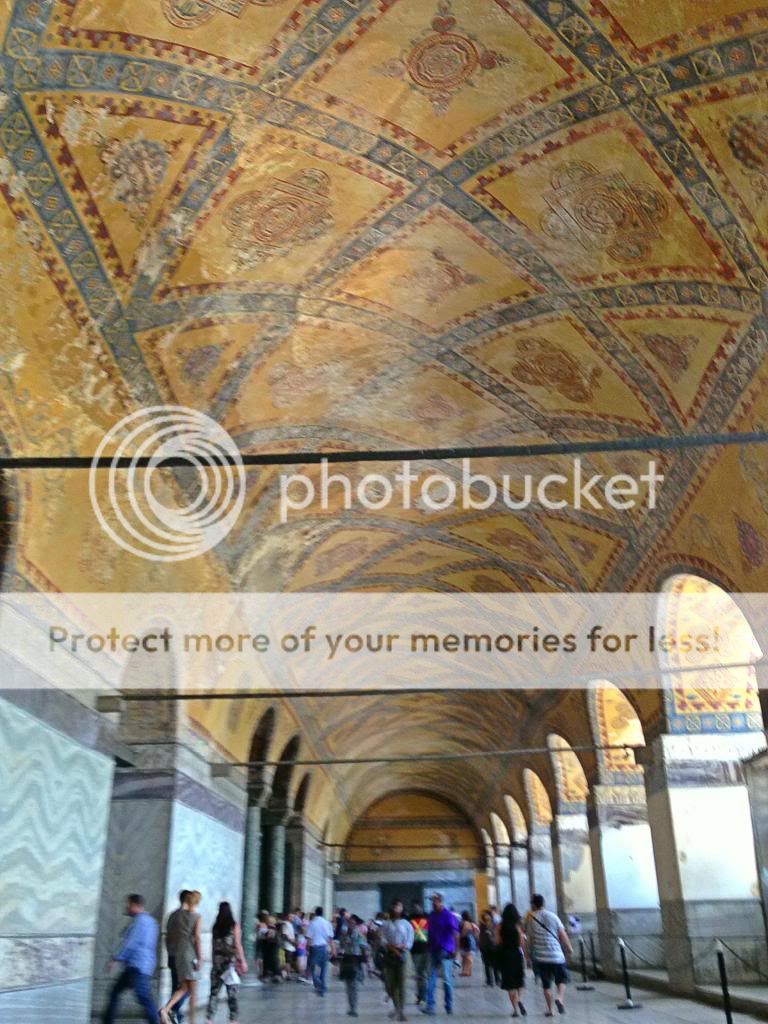
After walking through an arch or two and a gallery, the interior is visible:
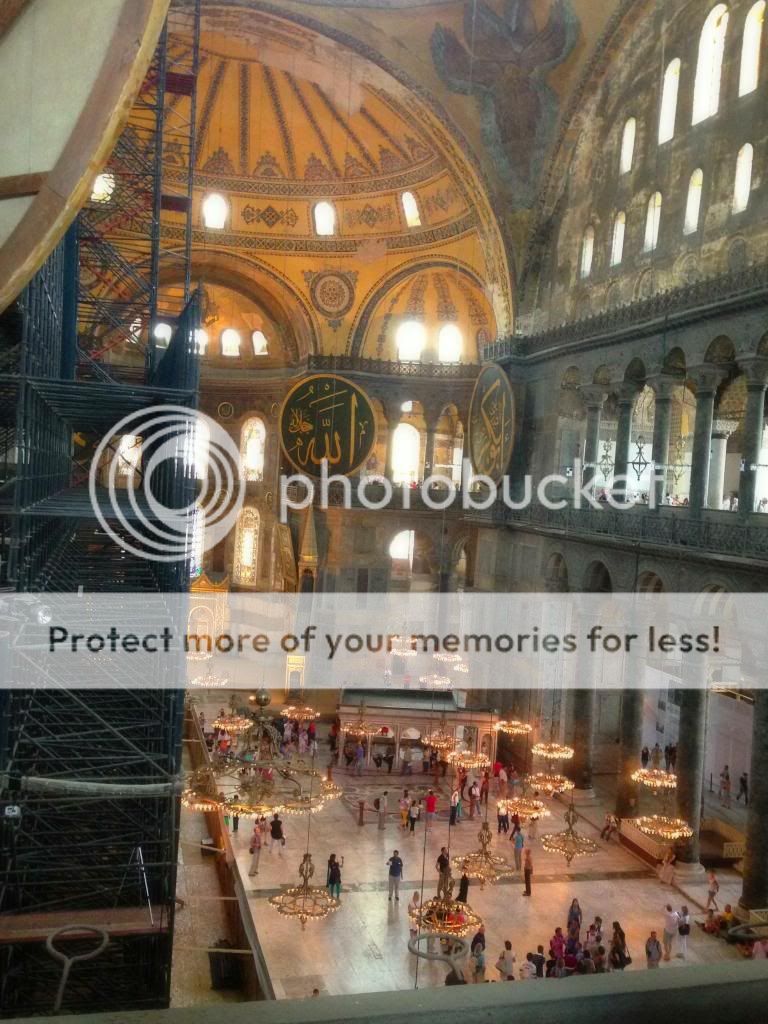
 The scale of the building is immense. Everything is huge! Part of it was closed off for repairs. The scaffolding you see in some of the photos is for this renovation.
Every surface is decorated beautifully. The imagery fluctuates between Christianity and Islam.
 That is the dome you see from the outside. It is flanked by smaller sections, all of which have murals on them.
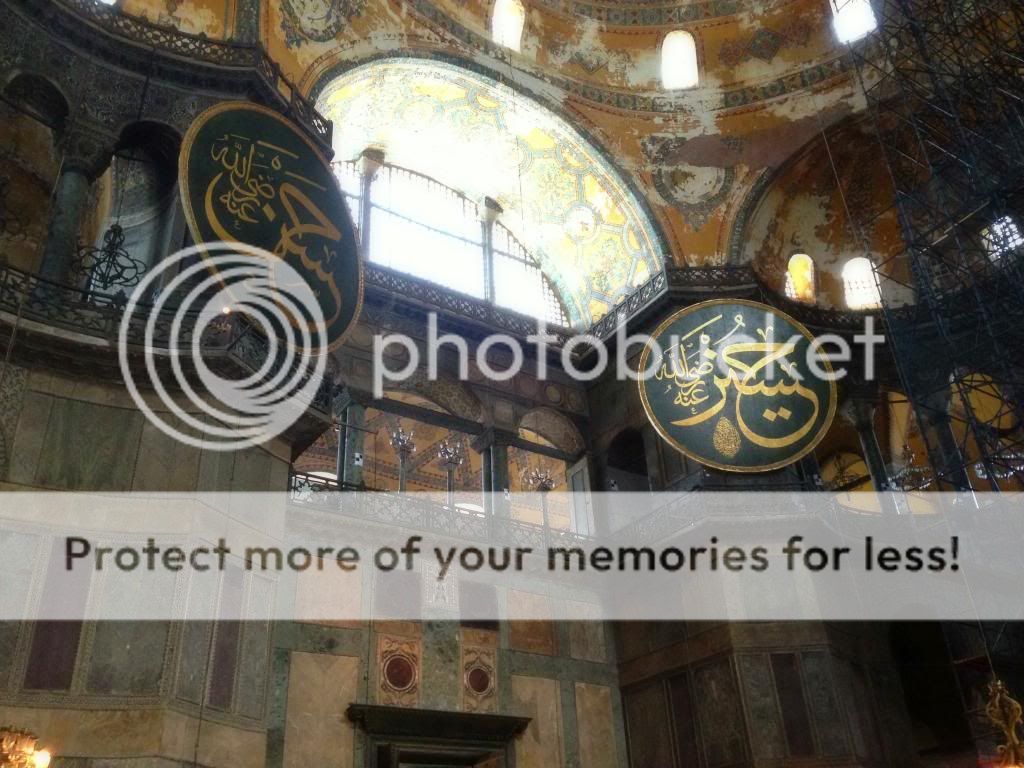
 At each corner are these giant calligraphy plaques...
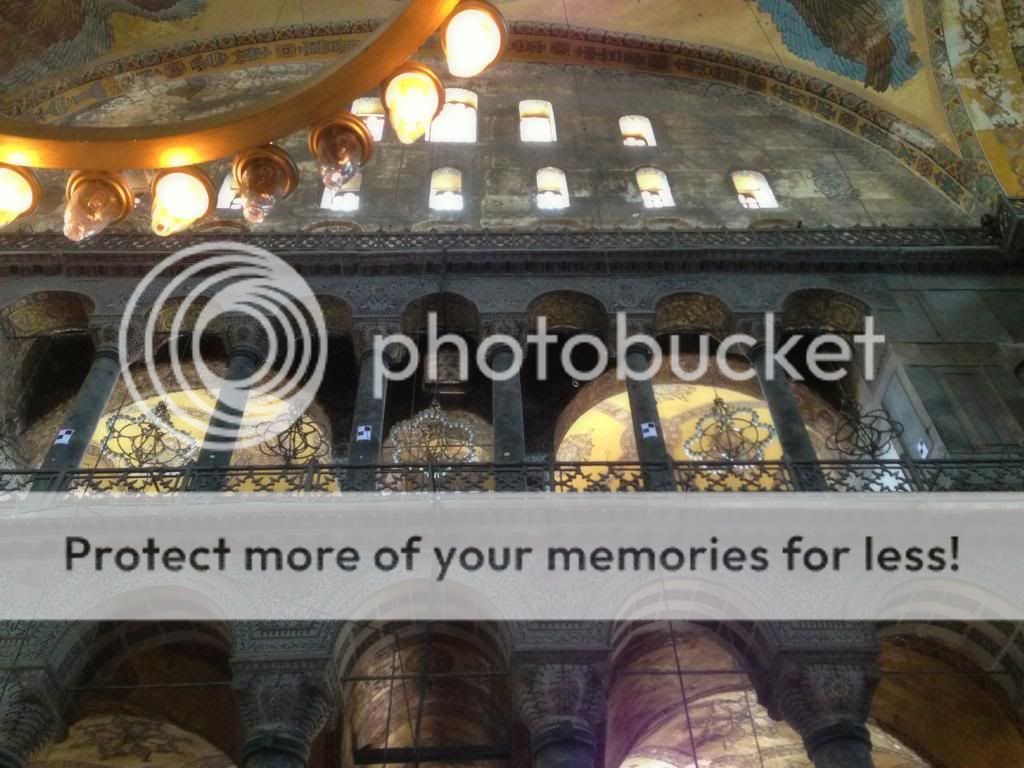
 There is an upper floor that was used by the women when it was a mosque.
 The lights are huge but beautiful!
 This the spot where the Sultan was crowned...
 Contrast the door to the pulpit where the mullah would go to lead the prayers,
 with this mural of the Virgin Mary.
 The Sultan got his own space and could ride his horse up there - there is a ramp visible from the outside.
 One of the galleries leading outside to the baptistry provides a snapshot of the decoration that is on every surface.
 And the font in the baptistry - there are steps to go down into the water.
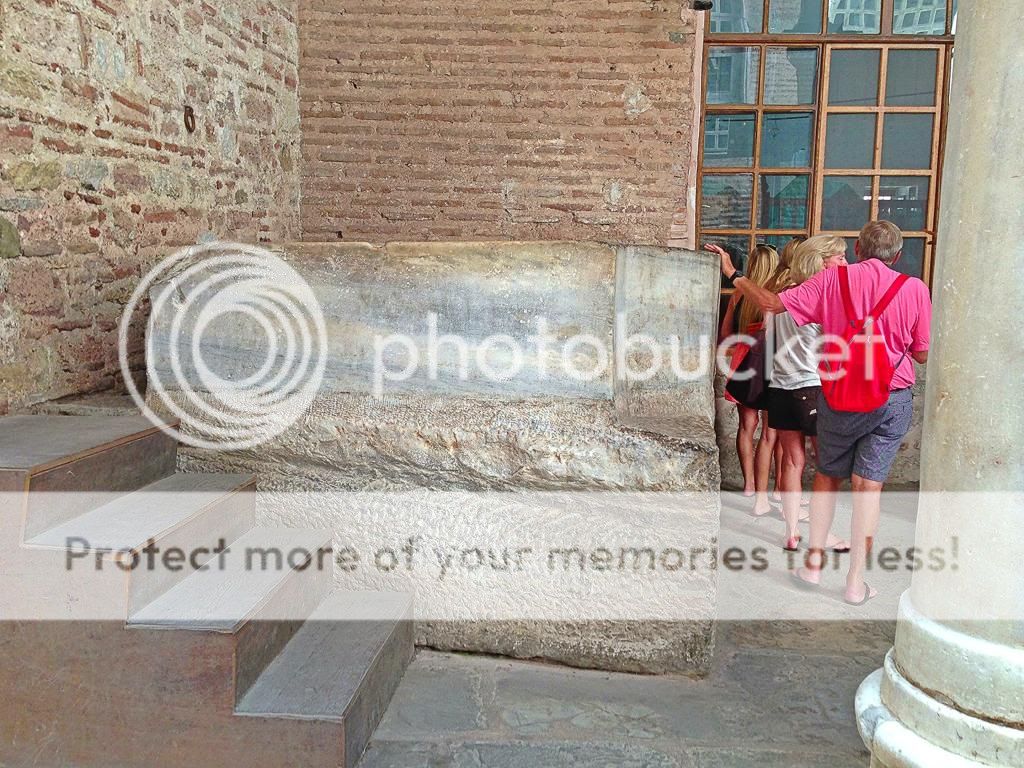
 This pillar contains a wishing hole. You put your thumb into the hole and turn your hand 360 degrees while making a wish.
 Yes, I tried it and no, I don't remember what I wished; but I did make a wish.
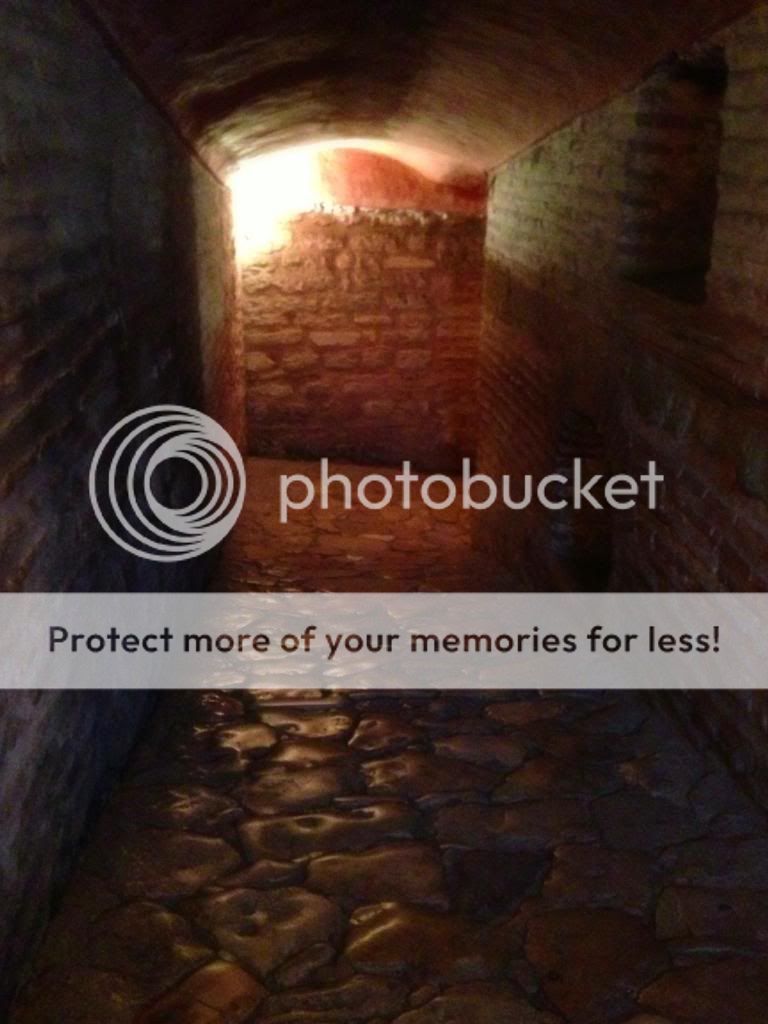
To reach the upstairs gallery, you walk up a winding ramp that looks like this - all the many lengths of it.
 I walked up with a couple who stopped to take photos along every length. I have no idea why. Maybe one of the photos was perfect.
The front gallery where the Empress and her attendants worshiped and watched the goings-on is lovely.
 She had a good view of the main floor from her vantage point:
 There are lots of murals upstairs too. This one is incomplete. The little one shows what it looks like when complete.

 On one of the railings, there are some scratches that are apparently Viking runes. The Vikings came this far south and added graffiti to show they were there ("Vikings were here")
 They are protected by acrylic and were pointed out by the audio guide, so I believe the story.
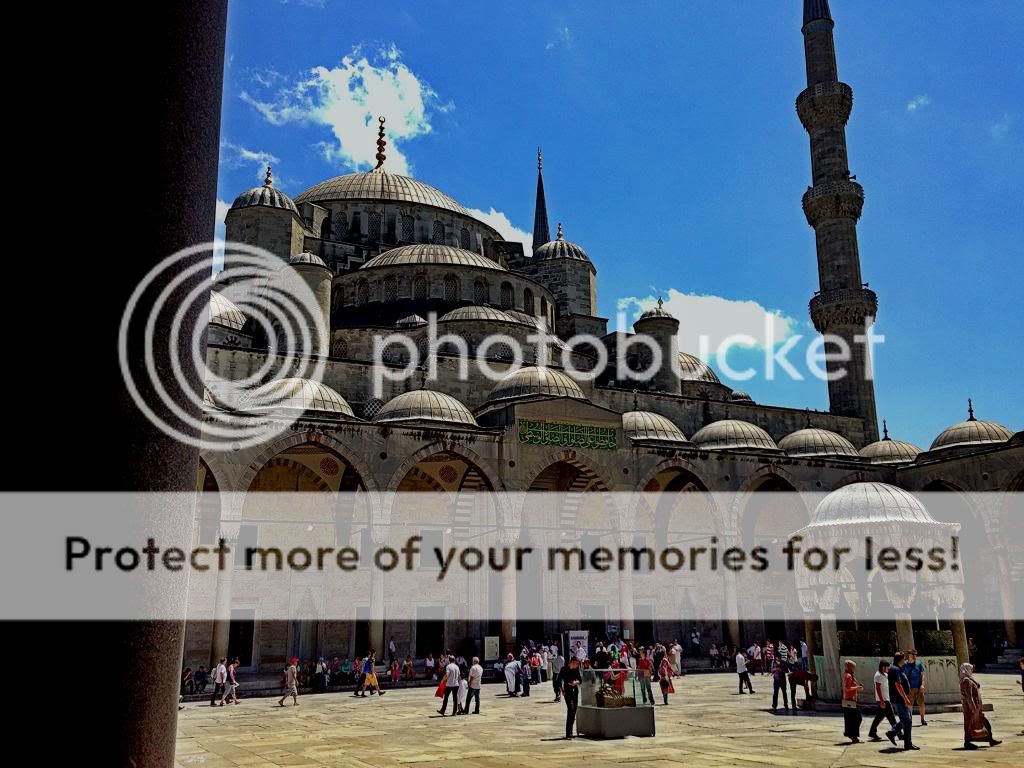
And with that, we move on to the Blue mosque. The mosque is so named because of the color of the tiles within. You enter a large courtyard..

Worshipers enter through one door, but tourists are directed to another gate. I had read that one has to be careful to wear modest clothing if one wants to go inside. No shorts above the knee, no sleeveless tops and no bare chests for men. But I saw lots of tourists that didn't meet these requirements. There were lots of signs stating these requirements but no one was enforcing them.
We left the courtyard and joined a fairly long queue that moved fast, but was still long and hot as it was all in the sun. Once we entered the back of the mosque, I realized why there was no enforcement of the rules.
Women like me, who were modestly clothed, were given a head scarf and nothing else. Some people had brought their own but I hadn't as I had been told that they would be provided. Women who didn't meet the rules were given a smock that went to the knees to put on over their clothes.
Men were given a sarong like wrap if their knees were exposed. All of us were given a bag for our shoes. We put on the garments we needed and took our shoes off. Then we had to pass by a pair of very vigilant guards - one woman and one man - who inspected us to make sure we met the rules. Then we could go into the mosque.
 One side was roped off for the tourists. The rest of the mosque was open for worship. It is closed during the daily prayers at fixed times but otherwise is open.


 This is where the men worship. The women are in a different area which is not visible from the tourist section.


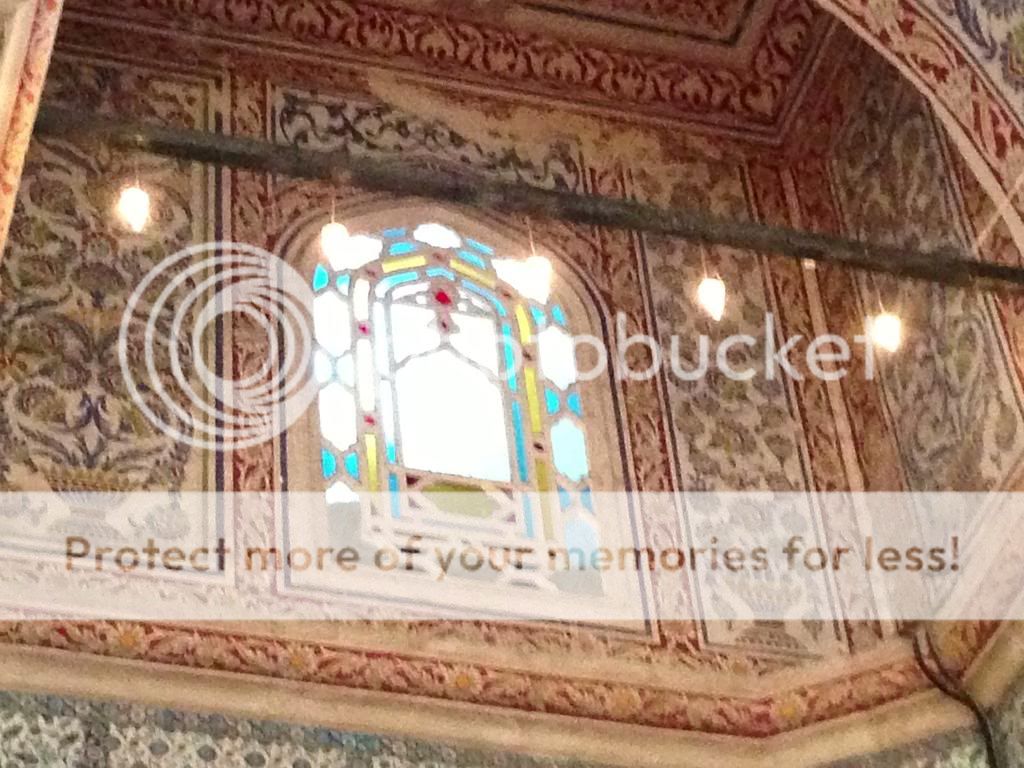
 And then we were out. There were bins for the clothes and bins for the plastic shoe bags so everything was clean and neat. It was all extremely efficient and did not disrupt the worship at all. It also was not very disruptive to the tourists either. We could stay as long as wanted, we could take photographs and gawk at the gorgeous tilework, stained glass and architecture. Some people sat on the carpets and looked around to their heart's content. Others of us spent 10-20 mins and left.
After leaving the mosque, I went back to the hotel and hung around for a bit before leaving for the airport. I could have stayed longer. There was so much more I wanted to see. History pours out of the pores of every building in the Sultanahmet area - the old town.
Of course, the history and culture in Beijing run as deep but so much of the city there has been demolished and modernized. In Istanbul, the history feels more alive. I wonder if it is because it is so much more familiar to us than the history in China. In any case, I find both of them equally fascinating.
We will go to a different continent yet again next time. But it will be a surprise.
Mirrored and glass goods, enameled goods, carpets, cotton and linen towels, scarves, hats, jewelry, copper goods, wall hangings, spices, etc. are all available here. And let us not forget the ubiquitous Turkish delight sweetmeat!
We spent a couple of hours wandering around looking at items, buying stuff, taking pictures and generally getting a feel for the place before heading out to dinner. It does get a bit overwhelming at times. There are areas that traditionally housed the carpets, the copper goods, the fabrics, etc. and these still tend to stay true to form.
Looking down one of the 'streets' in the Grand Bazaar:


The next day was spent at the Hagia Sofia and the Blue mosque. The Hagia Sofia was a church when Istanbul was still Constantinople. When the Muslims invaded and took over, it was converted into a mosque. Then, when Kemal Ataturk established the secular state of Turkey, it became a museum. All I can say is that it is beautiful and I could spend lots more time in there just feasting my eyes on the various details.
After walking through an arch or two and a gallery, the interior is visible:

Every surface is decorated beautifully. The imagery fluctuates between Christianity and Islam.





To reach the upstairs gallery, you walk up a winding ramp that looks like this - all the many lengths of it.
The front gallery where the Empress and her attendants worshiped and watched the goings-on is lovely.


And with that, we move on to the Blue mosque. The mosque is so named because of the color of the tiles within. You enter a large courtyard..
We left the courtyard and joined a fairly long queue that moved fast, but was still long and hot as it was all in the sun. Once we entered the back of the mosque, I realized why there was no enforcement of the rules.
Women like me, who were modestly clothed, were given a head scarf and nothing else. Some people had brought their own but I hadn't as I had been told that they would be provided. Women who didn't meet the rules were given a smock that went to the knees to put on over their clothes.
Men were given a sarong like wrap if their knees were exposed. All of us were given a bag for our shoes. We put on the garments we needed and took our shoes off. Then we had to pass by a pair of very vigilant guards - one woman and one man - who inspected us to make sure we met the rules. Then we could go into the mosque.


After leaving the mosque, I went back to the hotel and hung around for a bit before leaving for the airport. I could have stayed longer. There was so much more I wanted to see. History pours out of the pores of every building in the Sultanahmet area - the old town.
Of course, the history and culture in Beijing run as deep but so much of the city there has been demolished and modernized. In Istanbul, the history feels more alive. I wonder if it is because it is so much more familiar to us than the history in China. In any case, I find both of them equally fascinating.
We will go to a different continent yet again next time. But it will be a surprise.